


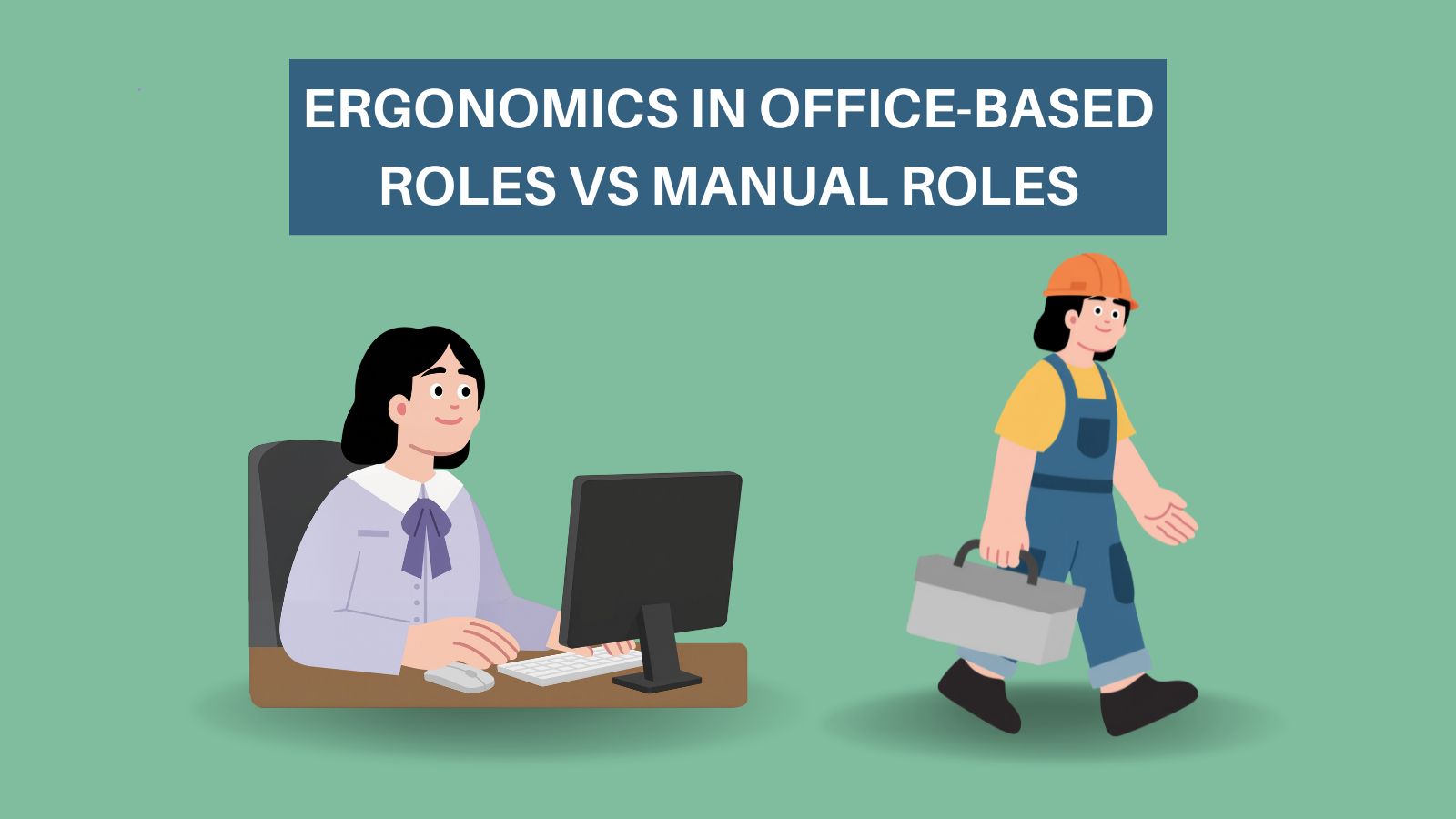
Ergonomics plays a critical role in reducing workplace injuries, improving productivity, and supporting employee wellbeing. However, the risks – and the solutions – can vary significantly between office-based and manual roles.
In this guide, we break down the key differences of ergonomics in office-based roles vs manual roles and explain how employers can take a more targeted, effective approach.
What is Workplace Ergonomics?
Workplace ergonomics refers to designing tasks, equipment, and environments to fit the needs of the employee.
The goal is to:
- Reduce physical strain
- Prevent musculoskeletal disorders (MSK)
- Improve comfort and efficiency
- Minimise absence and injury risk
Ergonomic risks exist in all job roles, but they present differently depending on the type of work being carried out.
Ergonomics in Office-Based Roles
Office-based roles typically involve prolonged sitting, screen use, and repetitive movements. While these roles may appear low risk, poor ergonomics can lead to long-term health issues if not addressed.
Common ergonomic risks in office environments:
- Incorrect desk, chair, or screen height
- Poor posture over extended periods
- Repetitive keyboard and mouse use
- Limited movement or breaks
Common symptoms:
- Neck and shoulder pain
- Lower back pain
- Eye strain and headaches
- Wrist and hand discomfort
Key takeaway:
Office ergonomics is primarily about posture, positioning, and movement over time.
Ergonomics in Manual Roles
Manual roles involve physical activity, often including lifting, carrying, or repetitive movements. These environments present a higher risk of both immediate injury and long-term musculoskeletal conditions.
Common ergonomic risks in manual roles:
- Heavy or awkward lifting
- Repetitive tasks with force
- Twisting, bending, or reaching
- Poor task design or workflow
Common symptoms:
- Muscle strains and sprains
- Chronic back pain
- Joint injuries
- Fatigue-related issues
Key takeaway:
Manual ergonomics focuses on movement, force, and task design.
Office vs Manual Ergonomics: Key Differences
Office-based roles:
- Lower immediate injury risk
- Issues develop gradually
- Focus on workstation setup and posture
- Often underreported until symptoms worsen
Manual roles:
- Higher risk of acute injury
- Physically demanding tasks
- Focus on lifting technique and task design
- Often addressed after incidents occur
Why Employers Need a Role-Specific Approach
A one-size-fits-all approach to ergonomics is rarely effective.
For example:
- A DSE checklist will not identify risks in a warehouse environment
- Manual handling training alone will not resolve poor workstation setup
Employers should consider:
- The type of work being carried out
- Individual employee needs
- The working environment (office, home, site-based)
A targeted approach leads to better outcomes and reduced long-term costs.
Ergonomic Services for Office-Based Workers
Supporting desk-based employees requires a focus on workstation setup and early intervention.
Key services include:
DSE (Display Screen Equipment) Assessments
Identify workstation risks and provide tailored recommendations.
Remote and on-site ergonomic assessments
Ensure consistency across office and home working environments.
Workstation adjustments and guidance
Practical, cost-effective changes to improve comfort and reduce strain.
Ergonomic Services for Manual Workers
Manual roles require a more hands-on, task-focused approach to risk management.
Key services include:
Manual Handling Training
Educates employees on safe techniques to reduce injury risk.
Ergonomic Risk Assessments
Evaluate tasks and environments to identify hazards and recommend improvements.
Functional Capacity Assessments (FCA)
Assess an employee’s physical capability, particularly useful for:
- Return-to-work planning
- Long-term absence
- Role suitability
Process Assessments
Review workflows and systems to reduce risk at an organisational level.
The Business Impact of Poor Ergonomics
Failing to address ergonomic risks can lead to:
- Increased sickness absence
- Reduced productivity
- Higher staff turnover
- Greater risk of long-term MSK conditions
- Potential compliance and legal issues
Proactive ergonomics is not just a health and safety measure, it’s a business investment.
How to Improve Ergonomics in Your Workplace
To reduce risk and support employees effectively, employers should:
- Assess risks based on job role
- Provide appropriate training and support
- Encourage early reporting of discomfort
- Implement tailored adjustments
- Review processes regularly
Early intervention is key to preventing minor issues from becoming long-term problems.
How Acorn Occupational Health Can Help
Acorn Occupational Health provides a range of ergonomic services designed to support both office-based and manual workforces.
These include:
- DSE Assessments
- Ergonomic Office Assessments
- Manual Handling Training
- Functional Capacity Assessments
- Process Assessments
Our approach focuses on practical, tailored solutions that help employers reduce risk, improve wellbeing, and maintain productivity.
Contact Us
When it comes to ergonomics in office-based roles vs manual roles, a one-size-fits-all approach simply doesn’t work. Each setting presents unique risks and requires tailored interventions.
By adopting a proactive, role-specific strategy, employers can create safer, more effective workplaces and reduce the long-term impact of musculoskeletal issues.
📞 01260 277797
📧 website@acornoh.co.uk